How to Choose the Right Yarn for Your Crochet Project
Choosing yarn is one of the most enjoyable parts of starting a crochet project. Soft colors, different textures, cozy fibers, and beautiful yarn labels can make you want to bring home everything in the craft store. But for beginners, choosing the right yarn for crochet can also feel confusing.
Should you use cotton or acrylic yarn? Is chunky yarn easier than thin yarn? Does the yarn color matter? What does yarn weight mean? And which yarn is best for crochet toys, bags, blankets, flowers, or home décor?
The right yarn can make your crochet project easier, neater, and more enjoyable. The wrong yarn does not mean your project will fail, but it can make stitches harder to see, change the final size, or create a texture that does not match the pattern.
This beginner-friendly crochet yarn guide explains how to choose yarn for crochet projects, what yarn weights and fibers mean, and how to find the best yarn for your next handmade idea.
Start With Your Crochet Pattern
The easiest way to choose yarn is to begin with the pattern instructions.
Most digital crochet pattern PDFs include a materials section near the beginning. This section usually recommends:
- Yarn weight
- Fiber type
- Suggested colors
- Approximate amount of yarn needed
- Crochet hook size
- Optional alternative yarn choices
Try to follow the yarn weight recommended by the pattern, especially when making your first few projects. Yarn weight affects the size, shape, texture, and overall look of your finished item.
For example, a small amigurumi pattern written for cotton yarn may become much larger if you use chunky yarn. A bag pattern created for thick t-shirt yarn may become too soft or floppy if made with thin acrylic yarn.
You do not always need to use the exact yarn brand named in a pattern. What matters most is choosing a yarn with a similar weight and texture.
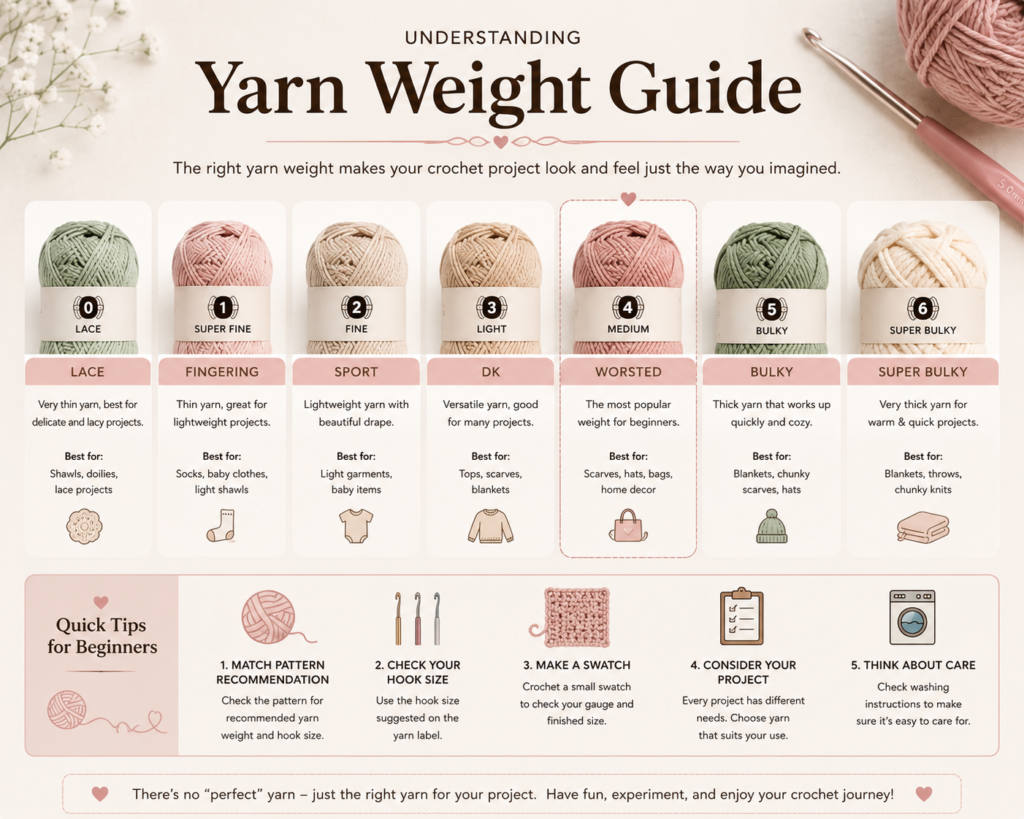
Understand Crochet Yarn Weight
Yarn weight does not mean how heavy the yarn ball feels. It describes the thickness of the yarn strand.
Different yarn weights create different stitch sizes and work best for different kinds of crochet projects.
Here are the most common yarn weight categories:
Lace and Fingering Weight Yarn
Lace and fingering weight yarn are very thin. They are often used for delicate crochet projects, lightweight garments, fine shawls, and detailed lacework.
These yarns can create beautiful results, but they are usually not the best choice for beginner crochet projects. Thin yarn can make stitches harder to see and count.
Sport and DK Weight Yarn
Sport and DK yarn are slightly thicker than fingering yarn. They are popular for lightweight clothing, baby items, scarves, and smaller crochet accessories.
DK yarn can work well for beginners who want a softer, finer result. However, it still requires more attention than medium-weight yarn.
Worsted Weight Yarn
Worsted weight yarn, sometimes called medium weight or category 4 yarn, is one of the best yarn choices for crochet beginners.
It is thick enough to see your stitches clearly, but not so thick that the project becomes difficult to handle. Worsted weight yarn is great for scarves, granny squares, small baskets, simple bags, home décor, and many beginner-friendly crochet projects.
A 4.5 mm, 5 mm, or 5.5 mm crochet hook often works well with medium-weight yarn, depending on the yarn label and pattern instructions.
Bulky and Super Bulky Yarn
Bulky yarn is thick, soft, and quick to work with. It is often used for cozy blankets, chunky scarves, baskets, pillows, and fast crochet projects.
Bulky yarn can feel satisfying because projects grow quickly. However, it may be harder for beginners to see individual stitches if the yarn is fuzzy or textured.
Choose a smooth bulky yarn if you want to try this weight. Avoid very fluffy or eyelash-style yarn for your first project because it can hide your stitches.
Choose the Right Yarn Fiber
Yarn can be made from many different fibers. Each fiber has its own feel, stretch, texture, durability, and care requirements.
The most common yarn fibers for crochet are acrylic, cotton, wool, and blended yarns.
Acrylic Yarn for Crochet
Acrylic yarn is one of the most popular choices for beginner crochet. It is affordable, widely available, lightweight, and comes in many colors.
Acrylic yarn is a great option for:
- Scarves
- Blankets
- Granny squares
- Simple accessories
- Beginner practice projects
- Decorative crochet items
- Plush toys and amigurumi
Acrylic yarn is usually easy to wash and does not require special care. It can also be soft and comfortable, especially when you choose a good-quality yarn.
For beginners, smooth acrylic yarn in a light color is often one of the easiest materials to crochet with.
Cotton Yarn for Crochet
Cotton yarn is strong, breathable, and has a clean stitch definition. It is especially popular for crochet bags, coasters, flowers, dishcloths, market bags, summer accessories, and home décor.
Cotton yarn works well for projects that need more structure. For example, a crochet flower vase, basket bag, or decorative item may look neater with cotton because it holds its shape well.
Cotton yarn is a good choice for:
- Crochet bags
- Coasters
- Placemats
- Flowers
- Home décor
- Baby accessories
- Amigurumi toys
- Washcloths
One thing to remember is that cotton yarn has less stretch than acrylic yarn. It can feel slightly firmer in your hands, especially when you are practicing. But it creates beautiful, clean stitches once you get comfortable.
Wool Yarn for Crochet
Wool yarn is warm, soft, and naturally elastic. It is commonly used for winter hats, scarves, sweaters, mittens, and cozy cold-weather projects.
Wool can be lovely to crochet with, but it may need more careful washing. Some wool yarns should be hand-washed, while others are machine washable.
For a first crochet project, acrylic or cotton yarn is usually easier and more affordable. As your confidence grows, you can explore wool blends and more natural fibers.
Blended Yarn for Crochet
Blended yarn combines two or more fibers. Common blends include cotton-acrylic, wool-acrylic, and bamboo-cotton yarn.
These blends can give you the best qualities of different materials. For example, cotton-acrylic yarn may have the softness of acrylic with some of the structure of cotton.
Blended yarn can be a good choice when you want a balance of comfort, durability, and easy care.
Pick a Yarn Color That Helps You Learn
Color matters more than many beginners realize.
Light and medium colors make crochet stitches easier to see. Cream, beige, soft pink, pale blue, sage green, light grey, and muted yellow are all great choices for learning.
Dark colors can hide individual stitches. Black, navy, dark brown, deep purple, and charcoal yarn may look beautiful, but they can be harder to work with when you are still learning where to insert your hook.
Very bright, multicolored, or highly patterned yarn can also make it difficult to see stitch details. Variegated yarn is fun, but it may distract from your stitch pattern during practice.
For your first project, choose one smooth yarn in a light or medium solid color. Once you feel confident, you can experiment with bold shades and color changes.
Smooth Yarn Is Easier Than Fuzzy Yarn
Texture can completely change the crochet experience.
Smooth yarn is best for beginners because you can clearly see the loops, rows, and stitch placement. Smooth cotton and acrylic yarn help you learn how each stitch is formed.
Fuzzy yarn, chenille yarn, eyelash yarn, boucle yarn, and velvet yarn can look soft and luxurious, but they may be difficult to work with at first. These yarns often hide stitches, making it harder to count rows or fix mistakes.
This does not mean you should avoid textured yarn forever. Plush yarn is popular for amigurumi and cozy soft toys. Just try it after you feel more comfortable with basic stitches.
A good beginner rule is simple:
Use smooth yarn to learn the stitches. Use textured yarn later to explore new styles.
Match Yarn to Your Crochet Project
Different crochet projects need different kinds of yarn. Thinking about how the finished item will be used can help you choose the best option.
Best Yarn for Amigurumi and Crochet Toys
Cotton yarn or cotton-blend yarn is commonly used for amigurumi because it creates neat, defined stitches and holds its shape well.
Smooth acrylic yarn can also work for crochet toys, especially for beginners who want a softer result.
For amigurumi, use a crochet hook slightly smaller than the yarn label recommends. This creates tighter stitches and helps prevent stuffing from showing through.
Best Yarn for Crochet Bags
Cotton yarn, macramé cord, t-shirt yarn, or sturdy blended yarn is often best for crochet bags.
These materials create a stronger structure and help the bag hold its shape. Thin, stretchy yarn may create a bag that becomes too loose when filled with items.
Best Yarn for Crochet Blankets
Acrylic yarn is a popular choice for blankets because it is soft, affordable, easy to wash, and available in many colors.
Bulky yarn can also create a warm, fast-to-make blanket. Choose smooth yarn when possible so your stitches remain clear and comfortable.
Best Yarn for Crochet Flowers and Home Décor
Cotton yarn is excellent for crochet flowers, decorative vases, coasters, small baskets, and home accessories.
Its structure helps flowers and shaped pieces look neat. It also gives your finished project a clean handmade look.
Best Yarn for Scarves and Wearables
Acrylic yarn, wool blends, and soft cotton-acrylic yarns are all useful for scarves and wearable crochet items.
Choose yarn that feels soft against the skin. Before buying a large amount, touch the yarn and consider whether it would feel comfortable around your neck, hands, or shoulders.
Check the Yarn Label Before Buying
The yarn label contains useful information that can help you choose the correct yarn.
Look for:
- Yarn weight category
- Recommended crochet hook size
- Fiber content
- Washing instructions
- Length or yardage
- Dye lot number
- Care symbols
The dye lot number matters when you need more than one ball of yarn in the same color. Yarn from different dye lots can have small color differences, even when the label name is the same.
Buying enough yarn from the same dye lot helps keep your finished project looking consistent.
How Much Yarn Do You Need?
The amount of yarn needed depends on the project size, yarn weight, stitch pattern, and hook size.
Small projects such as flowers, coasters, mini pouches, and small amigurumi pieces may only need one ball of yarn. Larger projects such as blankets, bags, garments, and large plush toys may need several balls.
Your crochet pattern should give an estimate of how much yarn you need. It is usually a good idea to buy a little extra, especially if you are making a large project or using a color that may be difficult to find again.
Extra yarn can also be useful for practice swatches, repairs, decorative details, or small matching accessories.
Do Not Be Afraid to Experiment
Once you understand yarn weight, fiber type, color, and texture, choosing yarn becomes much more fun.
You may begin by following a pattern exactly. Later, you can use the same pattern with different yarn colors, fibers, and hook sizes to create a completely new look.
A simple crochet flower pattern can become soft and romantic in blush pink cotton, bright and playful in yellow acrylic, or earthy and modern in sage green yarn.
Crochet gives you space to create something personal. The yarn you choose is part of the creative story.
Final Thoughts: Choose Yarn That Makes You Excited to Create
The best yarn for crochet is not always the most expensive or complicated one. It is the yarn that matches your project, feels comfortable in your hands, and makes you excited to start.
For beginners, smooth medium-weight acrylic or cotton yarn in a light color is usually the easiest place to begin. Pair it with a clear crochet pattern, a comfortable hook, and a little patience.
As you complete more projects, you will naturally learn which yarns you love most. Every new yarn teaches you something about texture, tension, color, and creativity.
Ready to put your yarn to use? Browse Sellixy’s beginner-friendly digital crochet patterns and find a project that inspires your next handmade creation.
Find a Pattern You’ll Love Making.
Explore beginner-friendly digital crochet patterns for plushies, bags, home décor, and thoughtful handmade gifts.
Shop Digital Crochet Patterns →