How to Read a Crochet Pattern for Beginners: A Simple Guide
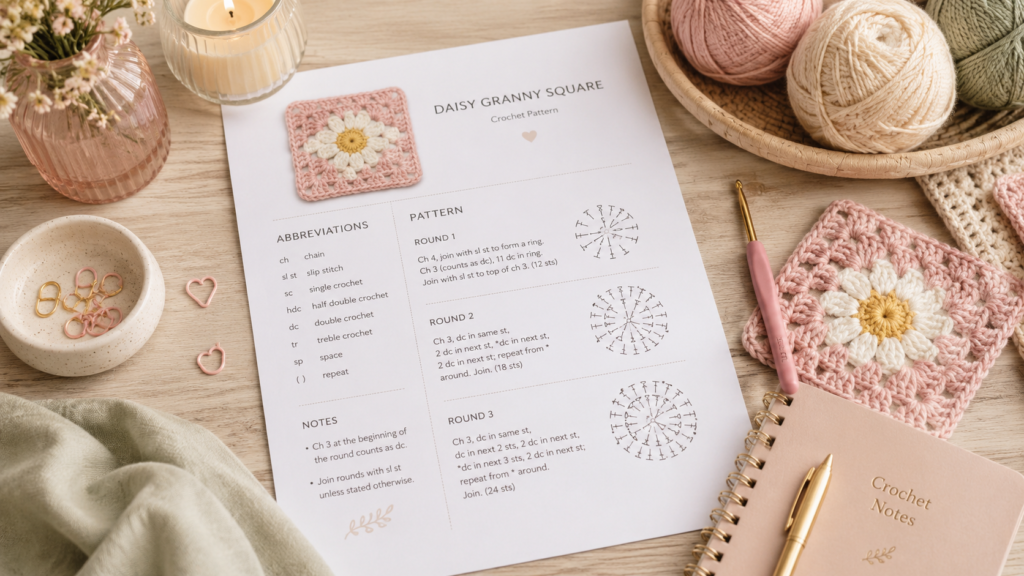
Starting your first crochet project is exciting, but opening a pattern and seeing abbreviations such as ch, sc, dc, inc, and sl st can feel confusing at first. Many beginners assume crochet patterns are difficult to understand because they look like a different language. In reality, every crochet pattern follows a simple structure.
Once you understand the basic terms, stitch counts, rows, rounds, and instructions, you can confidently start making beautiful handmade projects. Whether you want to crochet a cute amigurumi animal, a flower vase, a basket bag, or simple home décor, learning how to read a crochet pattern is one of the most useful skills you can build.
This beginner crochet guide explains how to read a crochet pattern step by step, what common crochet abbreviations mean, and how to make your first digital crochet pattern PDF feel easy and enjoyable.
What Is a Crochet Pattern?
A crochet pattern is a written set of instructions that tells you how to make a project using yarn and a crochet hook. It explains which stitches to use, how many times to repeat them, when to change colors, and how to shape the finished item.
Patterns can be printed in books, shared online, or downloaded as a digital crochet pattern PDF. A PDF crochet pattern is especially convenient because you can save it on your phone, tablet, or computer and use it whenever you are ready to crochet.
Most beginner crochet patterns include:
- A list of materials and tools
- Yarn recommendations
- Crochet hook size
- Crochet abbreviations
- Step-by-step instructions
- Stitch counts for each row or round
- Helpful notes and tips
- Photos or visual references in some patterns
At Sellixy, our digital crochet patterns are designed to make handmade projects feel more approachable, especially for makers who are still learning the basics.
Start With the Materials List
Before you begin reading the actual crochet instructions, always look at the materials list. This section tells you exactly what you need to complete the project.
A typical crochet pattern for beginners may include:
- Yarn type and weight
- Suggested yarn colors
- Crochet hook size
- Yarn needle
- Stitch markers
- Scissors
- Safety eyes or stuffing for amigurumi projects
- Optional decorations such as buttons, ribbons, or charms
Yarn weight is especially important. A pattern written for chunky yarn may not turn out the same if you use thin cotton yarn. Similarly, changing the crochet hook size can affect the size, texture, and shape of your finished project.
For your first few easy crochet projects, try to follow the recommended yarn and hook size as closely as possible. Once you gain confidence, you can start experimenting with different yarns and colors.
Understand Common Crochet Abbreviations
Crochet patterns use abbreviations to keep the instructions short and easy to follow. You do not need to memorize every abbreviation immediately. Most digital crochet pattern PDFs include an abbreviation guide near the beginning.
Here are some of the most common crochet abbreviations for beginners:
- ch – chain
- sc – single crochet
- hdc – half double crochet
- dc – double crochet
- tr – treble crochet
- sl st – slip stitch
- st – stitch
- sts – stitches
- inc – increase
- dec – decrease
- rep – repeat
- sk – skip
- BLO – back loop only
- FLO – front loop only
For example, an instruction may say:
Sc in next 3 sts, inc in next st. (5)
This means you should make one single crochet in each of the next three stitches, then make an increase in the next stitch. At the end of the row or round, you should have five stitches in total.
The number inside brackets or parentheses is usually the final stitch count. Always check this number because it helps you confirm that you are following the pattern correctly.
Learn the Difference Between Rows and Rounds
Crochet projects are usually worked in rows or rounds.
Crochet Rows
Rows are used when you crochet back and forth in a flat shape. Scarves, blankets, washcloths, and flat bag panels are often made in rows.
A row pattern may look like this:
Row 1: Ch 20, sc in second ch from hook and across. (19)
After finishing the row, you turn your work and start the next row from the opposite direction.
Crochet Rounds
Rounds are commonly used for circular or three-dimensional projects such as amigurumi, flowers, baskets, coasters, and crochet toys.
A round pattern may look like this:
Round 1: 6 sc in magic ring. (6)
This means you make six single crochet stitches into a magic ring. Then you continue working in a circle.
Many amigurumi crochet patterns are worked in continuous rounds. This means you do not join each round with a slip stitch. Instead, you keep crocheting around in a spiral. A stitch marker is very useful because it helps you track the beginning of each round.
Read the Stitch Count Carefully
The stitch count is one of the most important parts of any crochet pattern. It tells you how many stitches you should have after completing a row or round.
For example:
Round 3: (Sc, inc) repeat 6 times. (18)
This instruction means:
- Make one single crochet.
- Make one increase.
- Repeat that sequence six times.
- You should have eighteen stitches at the end.
If your stitch count does not match the number written in the pattern, stop and check your work before continuing. It is much easier to fix one round than to discover a mistake after completing half the project.
For beginners, counting stitches after every row or round can feel slow, but it quickly becomes a helpful habit. Accurate stitch counts create neat shapes, especially in plush crochet projects and amigurumi patterns.
Understand Repeats and Brackets
Crochet patterns often use brackets, parentheses, or asterisks to show which instructions you need to repeat.
For example:
(Sc 2, inc) x 6
This means:
- Make two single crochet stitches.
- Make one increase.
- Repeat the complete sequence six times.
Another example:
[Sc, dc, sc] in next st
This means all three stitches should be made into the same stitch.
Repeats make crochet patterns easier to read because they prevent the instructions from becoming too long. Instead of writing the same action many times, the pattern tells you exactly what to repeat and how often.
When you are learning, read one instruction at a time. Do not rush through an entire line. Complete the first stitch or group of stitches, then look back at the pattern before moving forward.
Pay Attention to Important Pattern Notes
Many beginner crochet patterns include notes before the instructions begin. These notes may explain how the project is constructed or highlight important techniques.
For example, a pattern note may say:
- Work in continuous rounds.
- Use a stitch marker at the first stitch of every round.
- Stuff the toy gradually as you crochet.
- Turn your work after each row.
- Join each round with a slip stitch.
- Keep your tension even throughout the project.
These small notes can make a big difference in the final result. Always read them before starting your project.
For amigurumi crochet patterns, stuffing instructions are especially important. If you wait until the end to stuff the piece, it can become difficult to fill small areas evenly. Adding a little stuffing as you go usually creates a smoother, more professional shape.
Check Your Gauge When Needed
Gauge means the number of stitches and rows that fit into a specific measurement, usually a small square. It helps ensure your finished project matches the intended size.
Not every beginner crochet project requires exact gauge. For simple decorative items, a small difference in size is usually fine. However, gauge matters more when you are making clothing, bags, fitted covers, or projects that must match a specific measurement.
Your crochet tension affects gauge. Some people crochet tightly, while others crochet loosely. If your project looks much smaller or larger than expected, try changing your hook size.
A smaller hook creates tighter stitches. A larger hook creates looser stitches.
For stuffed crochet toys and plushies, many makers use a slightly smaller hook than the yarn label suggests. This helps create tight stitches so the stuffing does not show through.
Take Your Time With Your First Pattern
The best way to learn how to read a crochet pattern is to start with a simple project. Choose a design with clear instructions, basic stitches, and manageable steps.
Do not worry about making your first project perfect. Crochet is a skill that improves through practice. Even experienced makers sometimes undo a few stitches and try again.
Use stitch markers, count your stitches, read each instruction carefully, and take breaks when you need them. A digital crochet pattern PDF allows you to work at your own pace, save your place, and return to the instructions whenever needed.
Ready to Start Your Crochet Journey?
Understanding crochet instructions becomes easier with every project you complete. Once you learn the basic abbreviations, stitch counts, and repeat sections, you will be able to explore many different crochet patterns with confidence.
Start with a beginner-friendly digital crochet pattern, gather your yarn and hook, and enjoy the process of turning simple stitches into something beautiful and handmade.
Browse Sellixy’s collection of digital crochet patterns for cozy home décor, adorable plush projects, stylish accessories, and creative handmade gifts. Every project begins with one stitch, one row, and the confidence to keep creating.
Find a Pattern You’ll Love Making.
Explore beginner-friendly digital crochet patterns for plushies, bags, home décor, and thoughtful handmade gifts.
Shop Digital Crochet Patterns →